Cataract Surgery in Anantapur
Cataract surgery in Anantapur at Sri Chakra Eye Hospital is a stitchless day-care procedure. Dr. Eswar Sakare removes the clouded lens by phacoemulsification through a 2-3 mm incision and implants a monofocal, toric, multifocal or EDOF intraocular lens. It takes 10 to 20 minutes per eye and most patients go home the same day.
Medically reviewed by Dr. Eswar Sakare, MBBS, DNB (Ophthalmology) · Last reviewed
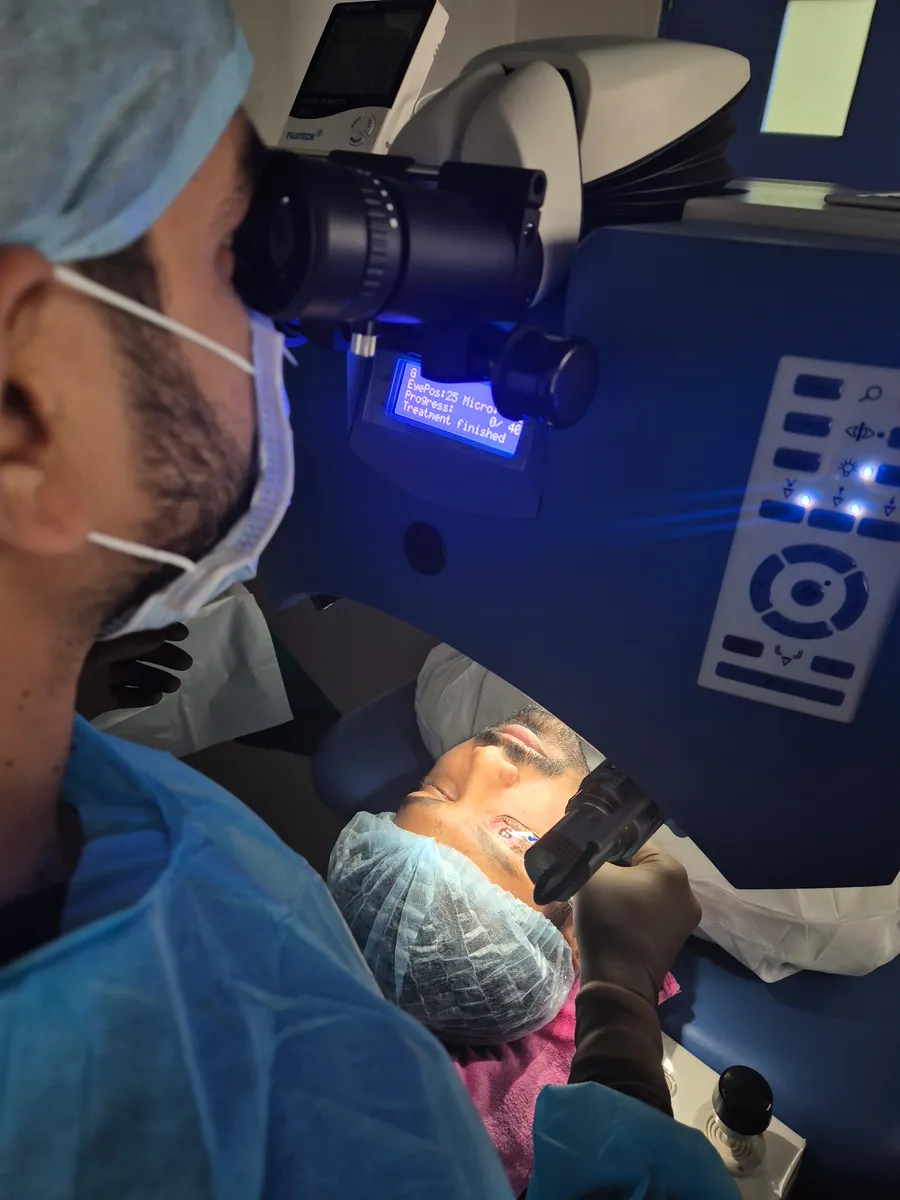
Understanding Cataract Surgery
Cataract is a clouding of the eye's natural lens that develops gradually, causing blurred vision, glare, and difficulty seeing at night. It is the most common cause of vision loss in people over 40.
The only effective treatment is surgery to remove the cloudy lens and replace it with a clear artificial intraocular lens (IOL). At Sri Chakra Eye Clinic, we use Micro-incision Phacoemulsification (MICS) — advanced stitchless cataract surgery — with premium IOL options including multifocal, toric, and EDOF lenses.
How It Is Treated
Every patient is unique. We tailor the treatment plan to your specific condition, needs, and lifestyle.
- 1Step 1
Comprehensive Assessment
Your journey begins with a thorough pre-operative evaluation including biometry for IOL power calculation and corneal topography. This 1-2 hour visit determines the best lens option for your eyes and lifestyle.
- 2Step 2
Surgery Day
The procedure takes 15–20 minutes under local anaesthesia as a daycare surgery. A tiny incision (2.2mm or less) is made, the cloudy lens is emulsified with ultrasound and gently removed, and the new IOL is implanted. No stitches are needed.
- 3Step 3
Immediate Recovery
You rest at the clinic for 2–4 hours. A protective shield is placed over your eye, and medicated drops are prescribed. Most patients notice improved vision within hours.
- 4Step 4
Follow-up & Healing
We schedule Day 1, Week 1, and Month 1 post-operative visits to monitor healing and visual rehabilitation. Full recovery typically takes 2–4 weeks, and you can resume light activities within 2–3 days.
Why Choose Sri Chakra Eye Hospital
Stitchless & Painless
Micro-incision phacoemulsification means no sutures, minimal discomfort, and a quick recovery.
Premium IOL Choice
Monofocal, multifocal, toric, and extended depth of focus (EDOF) lenses to match your vision needs and reduce spectacle dependence.
Daycare Procedure
Most patients go home the same day and return to normal activities within days, not weeks.
Intraocular Lens (IOL) Types Compared
The lens implanted during cataract surgery determines what you will see clearly afterwards. Dr. Eswar Sakare recommends a lens type after measuring your eye and discussing your daily visual needs.
| Lens type | Corrects | Reading glasses afterwards | Best suited to |
|---|---|---|---|
| Monofocal | Distance vision only | Usually needed for reading | Patients wanting proven, predictable distance vision |
| Toric | Distance vision plus astigmatism | Usually needed for reading | Patients with significant corneal astigmatism |
| Multifocal | Distance and near vision | Rarely needed | Patients prioritising spectacle independence, who accept possible night-time haloes |
| EDOF (extended depth of focus) | Distance and intermediate vision | Often needed for fine print | Computer and driving use, with fewer night-time visual effects than multifocal |
Frequently Asked Questions
Common questions about cataract surgery answered by Dr. Eswar Sakare.
Ready to Take the Next Step?
Schedule a consultation with Dr. Eswar Sakare at Sri Chakra Eye Clinic in Anantapur.